Biobased debondable adhesive
Request Information
Please sign in first or register for free to contact Avans Hogeschool.
- story by MaterialDistrict
Conventional petroleum-based adhesives present environmental challenges due to their toxicity, limited recyclability, and reliance on finite resources. The BiDebA (BioBased Debondable Adhesives) Interreg NWE project evaluated the biobased material poly(lactic acid) as an alternative thermoplastic adhesive suited for the temporary patch repair of damaged composite-based aircraft structures in both Defense and civilian applications.
The poly(lactic acid) adhesive blend was subjected to rigorous tests on composite material, proving its adhesive properties approach or even exceed the adhesion forces from conventional epoxy-based adhesives. After testing, the adhesive was tested on an actual part of a military aircraft in a demonstrator setup on Woensdrecht Airbase.
By turning the quick composite repair into a temporary one, the aircraft can fly back to base safely. There, the temporary patch can be removed, and the original hole can be repaired permanently without the need to cut-out any extra material as would be necessary with conventional adhesives.
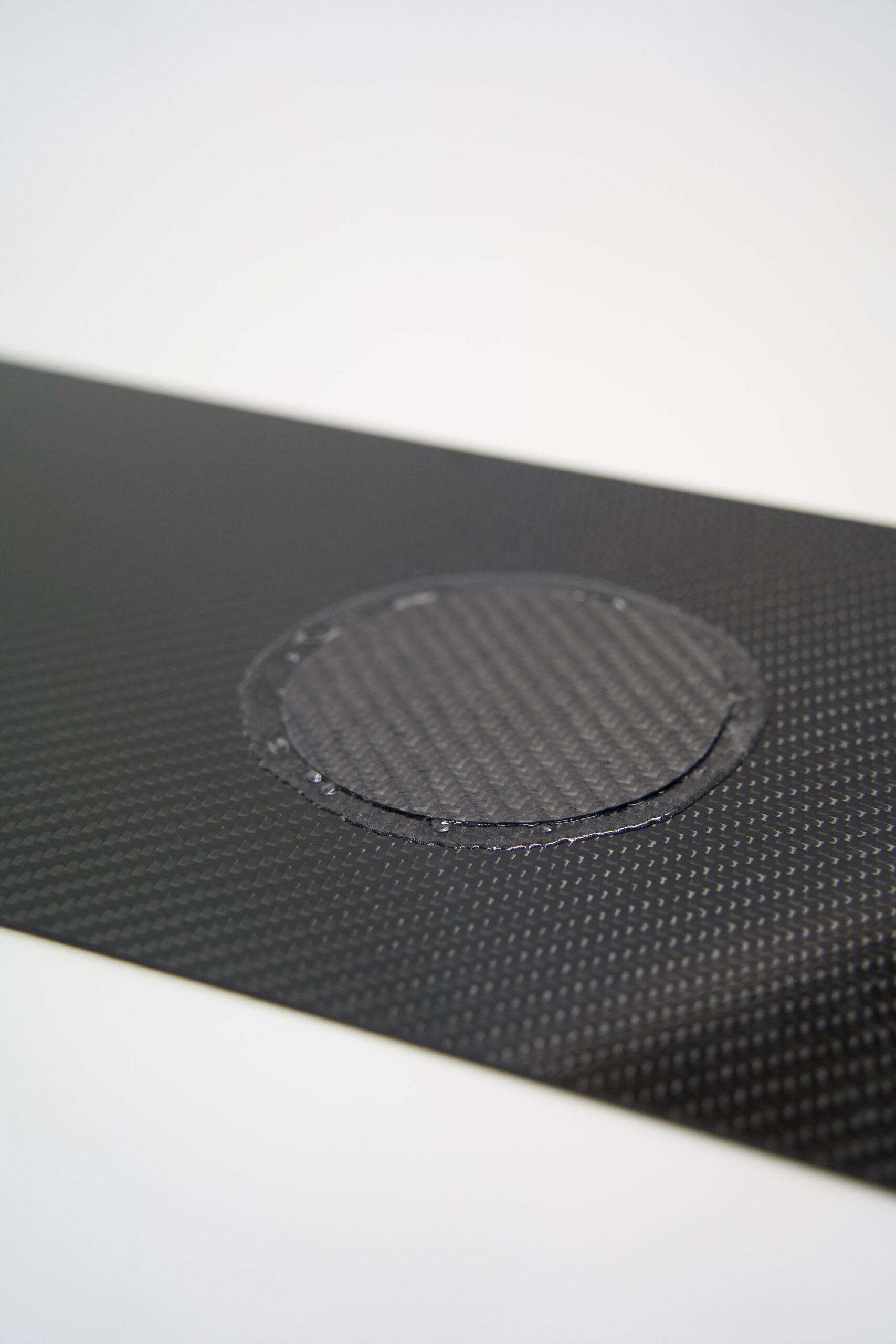
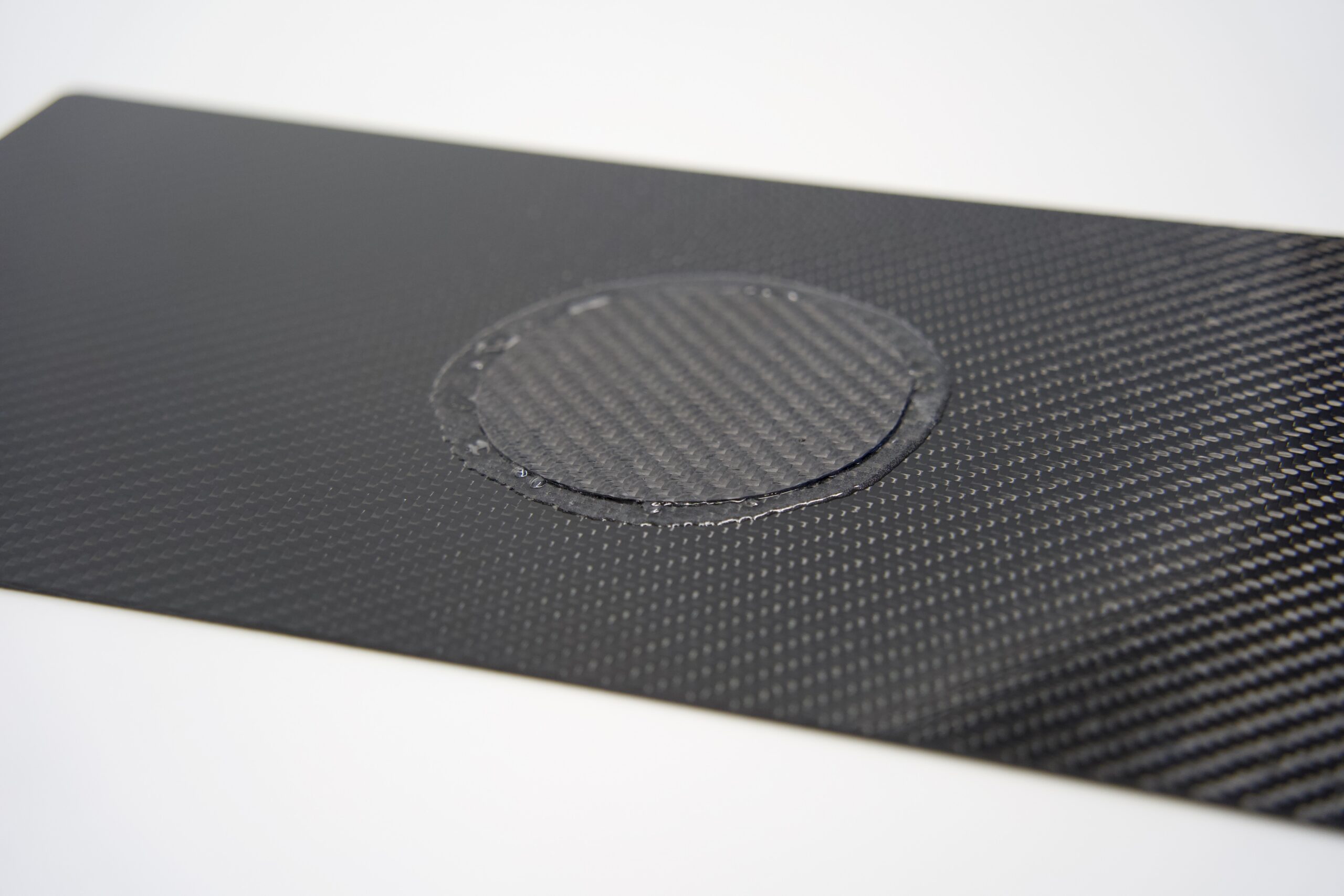
The material presented represents the temporary patch repair of a composite (carbon fiber reinforced polymer) plate with a two-ply patch of the same material. Both composite materials were joined with the poly(lactic acid) adhesive blend (slightly sticking out from the patch), forming a strong, stiff joint. Although the repair seems permanent, the process of adhesion can easily be reversed by heat.
Find out more here.